
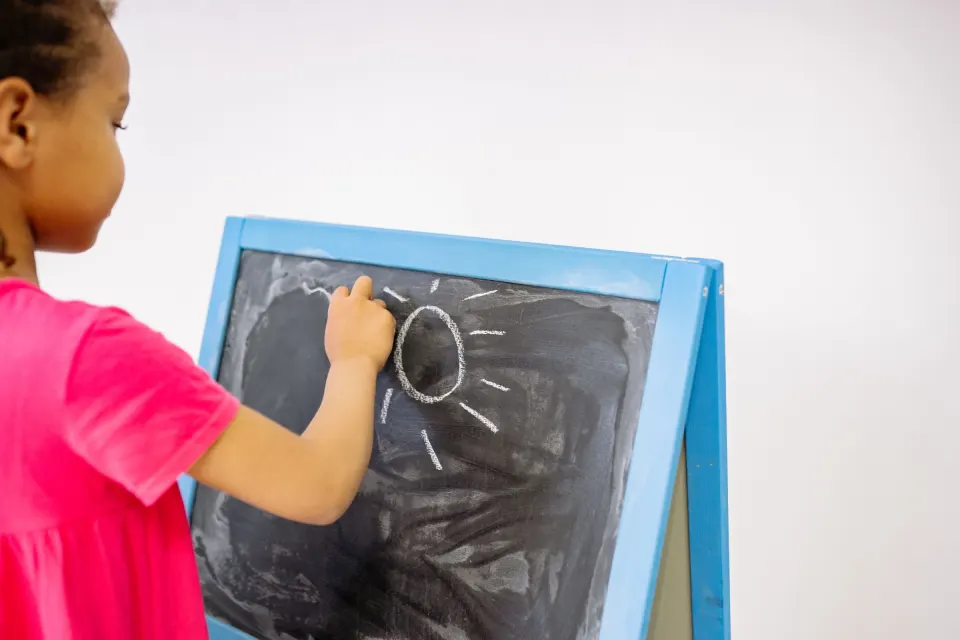
Play with a purpose
Every corner of the room is set up for something: counting in the shop, writing in the post office, measuring at the water table. Children choose where to go; teachers nudge.
Play is how young children work. We set up the rooms, the garden and the day so that the play leads somewhere, and we listen far more than we talk.
Every corner of the room is set up for something: counting in the shop, writing in the post office, measuring at the water table. Children choose where to go; teachers nudge.
Each teacher speaks her own home language with the children all day, so they hear each one spoken naturally. No child is ever corrected for answering in another.
Planting and picking, insects and weather, digging and building. Half of every morning is spent outside.
One adult for every six children means a teacher notices when a child is stuck, bored, or ready for more.
Children who keep their home language strong find the next language easier, and they feel at home on the first day. So nobody gives up a language here: everyone gains two.
This week's word, on the classroom door every Monday. By Friday the children are teaching it to their parents.
The same word in each language, with a song, a picture and a game, so it sticks three times.
And in the garden, the children check the rain gauge they made, and write down what it says.
Sung at every morning ring, one verse in each language. The children choose the order.
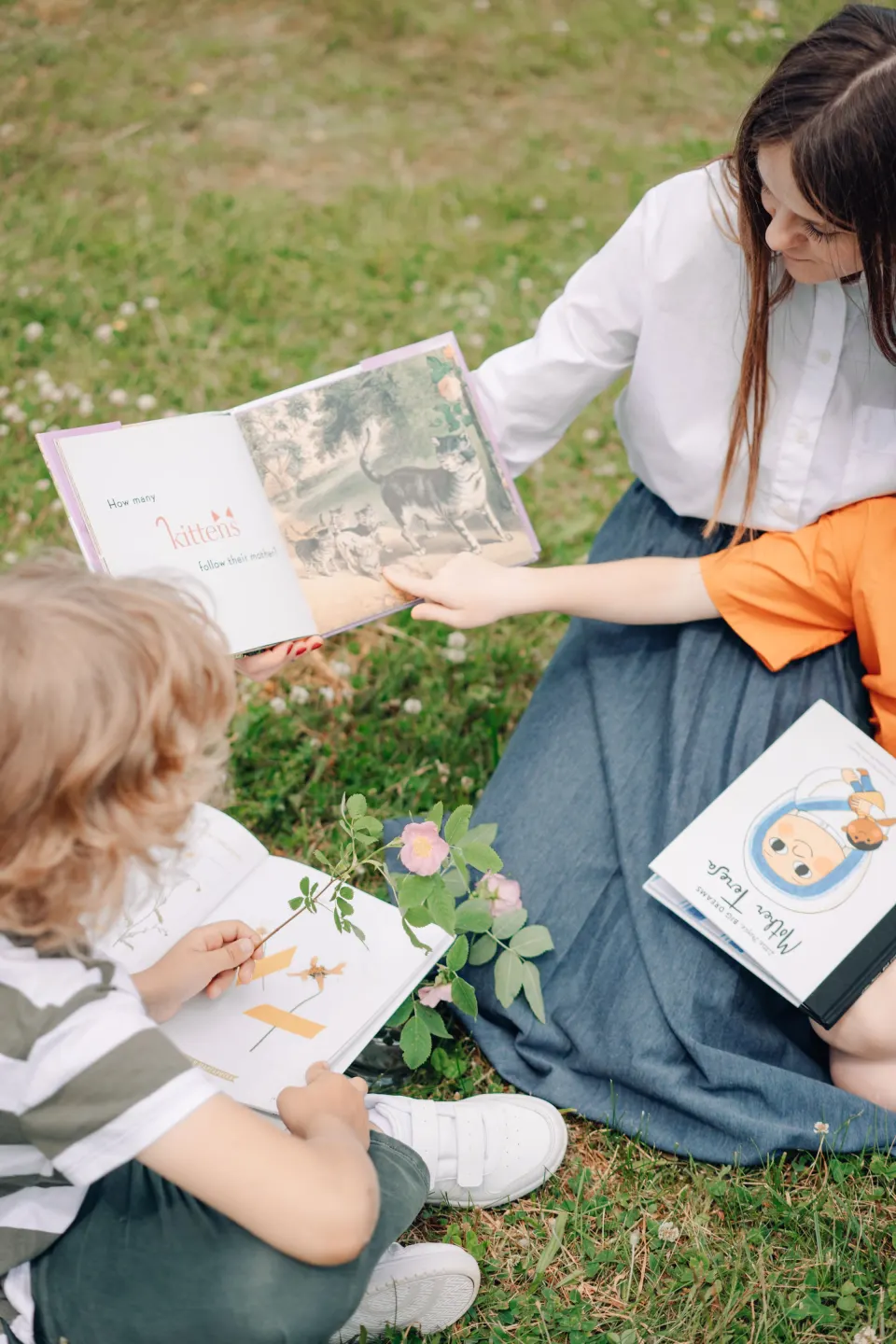
Stories under the fig, painting at the easels, beans to measure and a compost heap to feed. Children who spend time outside sleep better, eat better and argue less. We see it every day.
Twice a year, in June and November, you get a written report and a meeting with the teacher. Day to day, the notes are in the app.
Speaks in full sentences, retells a story, follows two instructions at once.
Counts to twenty, knows more and fewer, names a circle, square and triangle.
Hops, skips and catches, cuts with scissors, holds a pencil properly.
Dresses, packs a bag, waits for a turn, and asks for help when it is needed.
“We would rather a child spent an hour on one good tower than ten minutes on each of six worksheets.”
Ruth Abrahams, principal and founder

Tuesday to Thursday at 09:30, while the children are busy. It takes 45 minutes, and your little one is welcome to come along.